A Community Problem and Practical Options
Prepare a B1 community problem and practical options
เตรียมพื้นฐานปัญหาชุมชนและทางเลือกที่ทำได้จริงระดับ B1

Evaluate public-space options, stakeholder trade-offs and constraints, then revise a responsible response with evidence.
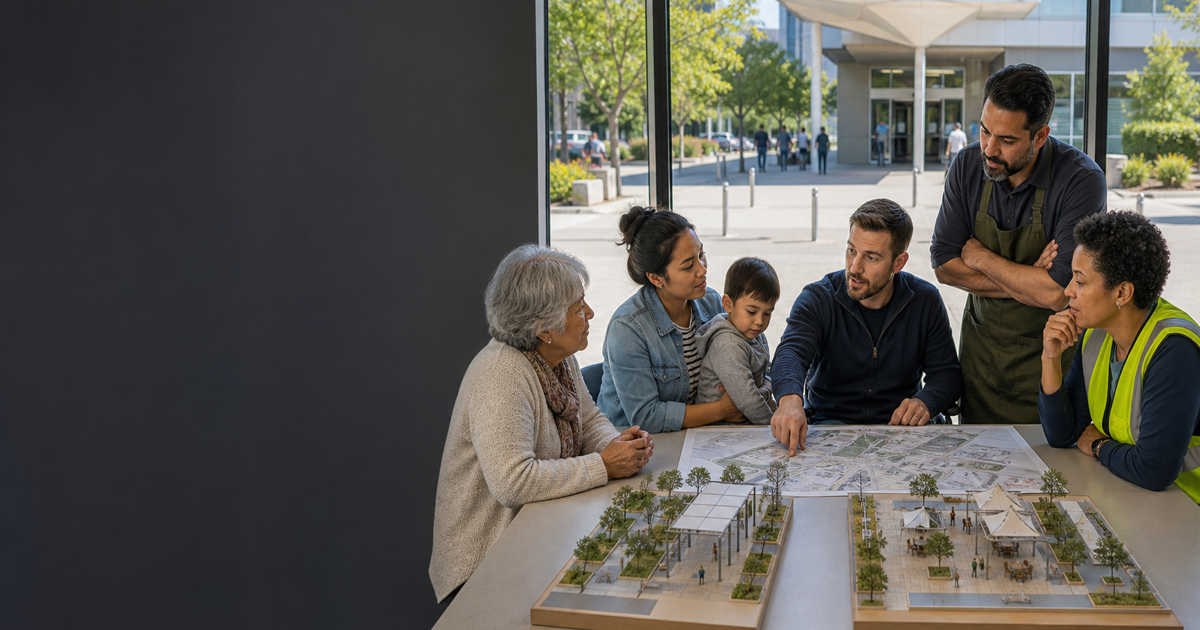
B2 · Weigh evidence, trade-offs and changing constraints
For learners: Use evidence to balance stakeholder needs, constraints and trade-offs before recommending a responsible public response.
For teachers: The lesson moves from evidence classification to stakeholder comparison, listening updates, constraint-based adaptation and an independent mixed-skill recommendation.
สำหรับผู้เรียน: ใช้หลักฐานชั่งน้ำหนักความต้องการของผู้มีส่วนได้ส่วนเสีย ข้อจำกัด และผลได้ผลเสีย ก่อนเสนอทางตอบสนองต่อสาธารณะที่รับผิดชอบ
สำหรับครู: บทเรียนไล่จากการจำแนกหลักฐาน การเปรียบเทียบผู้มีส่วนได้ส่วนเสีย การฟังข้อมูลใหม่ การปรับตามข้อจำกัด และการเสนอคำตอบแบบบูรณาการอย่างอิสระ
Evaluate options, stakeholder trade-offs and constraints, then agree and revise a responsible response independently.
ประเมินทางเลือก ผลได้ผลเสียของผู้มีส่วนได้ส่วนเสีย และข้อจำกัด จากนั้นเลือกและปรับข้อเสนอที่รับผิดชอบได้อย่างอิสระ
For the learner: Public decisions rarely satisfy every group equally. A responsible response makes trade-offs explicit and changes when decisive evidence changes.
For the teacher: Reading, data interpretation, listening, negotiation and an independent recommendation form one evidence-to-action cycle.
เหตุผลภาษาไทย: ผู้เรียนฝึกใช้หลักฐานเพื่อชั่งน้ำหนักความต้องการของหลายกลุ่ม อธิบายผลได้ผลเสีย และปรับข้อเสนอเมื่อข้อมูลสำคัญเปลี่ยน
This is a fictional, politically neutral classroom case. Require evidence for every trade-off and never reward a confident recommendation that ignores access or safety constraints.
| Time | Teacher does | Student does | Required evidence |
|---|---|---|---|
| 0–3 | Shows the case evidence without naming a preferred option. | Labels fact, viewpoint, value and constraint. | Four accurate evidence types. |
| 3–7 | Elicits trade-off and conditional language. | Repairs four over-simple claims. | Proportionate language. |
| 7–12 | Challenges a one-criterion decision. | Compares both options for five stakeholder groups. | Benefit, burden and unanswered question. |
| 12–17 | Plays Audio 1 for gist and decision-changing detail. | Updates the stakeholder map and provisional response. | Listening-based revision. |
| 17–23 | Adds budget and access constraints. | Revises the response with condition, monitoring and fallback. | Reasoned adaptation. |
| 23–30 | Plays Audio 2 and scores the first unsupported response. | Integrates all sources, decides and retries one weak criterion. | EVD / ADAPT / FP. |
Separate measured facts from stakeholder views, public values and fixed constraints.
Keep fact, viewpoint, value and constraint distinct. A survey response is evidence of preference, not proof that one design will work.
Match the strength of your language to the strength and scope of the evidence.
Require one positive, one neutral and one negative or uncertain statement. Correct overstatement before fluency.
No single criterion decides automatically.
| Criterion / stakeholder | Option A · Permanent shade and seating | Option B · Movable shade and flexible seating | Decision question |
|---|---|---|---|
| Older clinic visitors | Reliable shade and fixed supportive seating. | Shade position can change; daily availability uncertain. | Which response is dependable during a heatwave? |
| Wheelchair users and parents | Wide marked path can be built into the plan. | Movable items may drift into the route. | How will clear width be protected? |
| Shops and deliveries | Fixed layout may reduce flexible delivery space. | Can be moved during delivery hours. | Who moves and restores the equipment? |
| Maintenance team | Annual maintenance estimated at $1,800. | Daily setup estimate not yet measured. | Which workload evidence is missing? |
| Cost and timing | $42,000; six-week installation. | $18,000; two-week setup. | What is gained or delayed by each choice? |
Challenge shade-only, cost-only or majority-only decisions. Ask which group bears the cost, effort or access risk.
Listen once for the decision problem and once for evidence that changes the balance.
Key evidence: 126 responses; 78 shade-first; 54 step-free-route-first; older residents prefer permanent seating; shops need 11–1 deliveries; movable setup 90 minutes daily; four-metre emergency lane; heatwave next month.
Transcript: Here is the consultation update. We received one hundred and twenty-six responses. Seventy-eight people ranked shade as the first priority, while fifty-four ranked a clear step-free route first. Older residents preferred permanent seating, but shop owners asked for delivery access from eleven to one. The maintenance team estimated that movable structures would require ninety minutes of setup and storage each day. Emergency services require a four-metre clear lane at all times. A heatwave is forecast next month. Recommend one response, name the stakeholders who gain and lose, and identify one condition before approval.
Play once for gist and once for evidence. Allow one focused replay only when a decision-changing detail is missing.
A responsible response changes only when the new information changes the evidence balance.
The available first-year budget falls to $32,000. The clinic also needs the step-free route open throughout installation.
Protect heat safety, step-free access, deliveries and emergency access without promising an unfunded full design.
Do not accept “combine both” unless the learner explains scope, cost, responsibility and protected access.
Listen to an independent site review and give a complete final response without a model.
No model. Evidence notes only.
An independent site review has added three findings. Underground pipes reduce the area available for permanent foundations by one third. A local grant will cover half the cost of permanent shade if the accessible route and emergency lane are protected. During a windy-day trial, two movable canopies had to be closed for safety. The clinic expects more older visitors during the heatwave. Decide whether to keep, revise or combine your response, and state one monitoring signal and fallback.
2: Compares sources and separates fact, viewpoint, value and constraint accurately.
1: Uses relevant evidence but misses one source, limit or stakeholder effect.
0: Relies on preference or misstates decision-changing evidence.
2: Revises or defends the response explicitly because of new evidence and constraints.
1: Updates the response with only a partial link to the new information.
0: Ignores the new evidence or gives no reasoned adaptation.
2: Gives a balanced independent response with condition, monitoring and fallback.
1: Decision is understandable but needs a prompt or misses one required element.
0: Cannot complete a coherent responsible response.
Target: 5/6 overall, EVD = 2 and no zero. Score the first unsupported performance, give one focused correction, then rerun only the weakest criterion.
Play once for gist and once for evidence. Hide all models. Give one evidence correction and one language correction before the focused retry.
แยกข้อเท็จจริง มุมมอง คุณค่าที่ต้องรักษา และข้อจำกัดให้ชัด เปรียบเทียบว่าแต่ละทางเลือกให้ประโยชน์กับใครและเพิ่มภาระให้ใคร จากนั้นเสนอเงื่อนไขอนุมัติ สิ่งที่จะติดตาม และแผนสำรอง
Prepare a B1 community problem and practical options
เตรียมพื้นฐานปัญหาชุมชนและทางเลือกที่ทำได้จริงระดับ B1
Review community needs from short public notices
ทบทวนการฟังความต้องการของชุมชนจากประกาศสั้น
Choose an innovation for the community through roleplay
เลือกนวัตกรรมเพื่อชุมชนผ่านบทบาทสมมติ
Explore a related public-service situation
สำรวจสถานการณ์บริการสาธารณะที่เกี่ยวข้อง