Past-simple Questions and Negatives with did
Ask about completed past events before you build the background scene.
เรียนการถามและแก้ข้อมูลเหตุการณ์ที่จบแล้วก่อนสร้างภาพพื้นหลัง

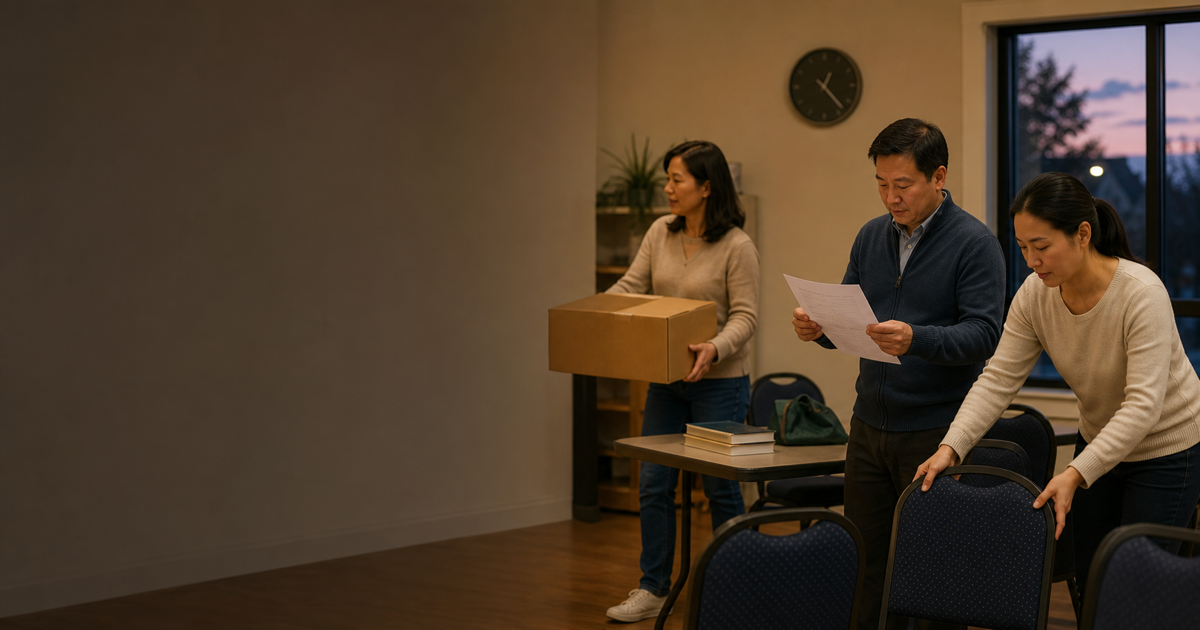
Build the scene around one past moment, connect simultaneous actions and answer a listener’s check question.
For learners: You can already ask about completed past events. Now build the background that shows what was happening around one past moment before you combine both forms in the next lesson.
For teachers: The route fixes one past time, separates ongoing background from completed results, controls was/were + -ing, builds a coherent multi-person scene, then checks comprehension through Was/Were questions and a focused retry.
สำหรับผู้เรียน: คุณถามเหตุการณ์ที่จบแล้วได้แล้ว ขั้นนี้จะช่วยสร้างภาพพื้นหลังว่าแต่ละคนกำลังทำอะไรอยู่ ณ เวลาเดียวกัน ก่อนนำ Past Simple และ Past Continuous ไปใช้ร่วมกันในบทถัดไป
สำหรับครู: ลำดับเริ่มจากความหมายของเหตุการณ์ที่กำลังดำเนินอยู่ ควบคุม was/were + -ing เชื่อมคน การกระทำ และสถานที่ แล้วให้ผู้ฟังถามตรวจสอบก่อนประเมินและลองแก้เฉพาะจุด
Use was/were + verb-ing to describe six actions in progress around one past time, add useful location details and answer a partner’s Was/Were…? question accurately.
ใช้ was/were + กริยา-ing เพื่อสร้างภาพว่าหลายคนกำลังทำอะไรอยู่ ณ เวลาเดียวกันในอดีต เพิ่มรายละเอียดสถานที่ และตอบคำถามตรวจสอบของผู้ฟังให้ชัดเจน
A listener understands a past story more easily when you first establish what was already happening around the main event. The past continuous turns separate details into one clear background scene.
ภาษาไทย: ก่อนเล่าเหตุการณ์สำคัญ ผู้ฟังต้องเห็นภาพพื้นหลังก่อนว่าใครกำลังทำอะไรอยู่ การใช้ past continuous ช่วยเชื่อมหลายการกระทำให้อยู่ในช่วงเวลาเดียวกัน
Begin with a frozen past moment, not a tense label. Ask “What was already in progress at that time?” before directing attention to was/were + verb-ing.
| Stage | Teacher move | Evidence to collect |
|---|---|---|
| 1 · Meaning | Contrast an action in progress with a completed result. | Four meaning decisions |
| 2 · Form | Match each subject to was/were before adding the -ing verb. | Six controlled forms |
| 3 · Decide | Require a time-and-subject reason before checking. | Five choices + two repairs |
| 4 · Build | Connect actions with one time anchor and precise locations. | Six scene details |
| 5 · Check | Have the listener ask for one missing or uncertain detail. | Description + check answer |
| 6 · Perform | Score the first scene, give one target and allow a focused retry. | Independent scene reconstruction |
Meaning comes first: decide whether the speaker is showing an action in progress or reporting a completed result.
The action was happening around 7:30. We see the background scene, not its end.
Question → What was happening then?The action finished before that time. We focus on the completed result.
Question → What did Maya finish?Use a hand gesture that pauses a scene at one time. If the learner only names yesterday or last night, ask for a specific anchor such as 7:30, when I arrived or during the meeting.
Build the form in two decisions: choose the correct form of be, then add the ongoing action.
| Purpose | Pattern | Example at 7:30 |
|---|---|---|
| Positive | I/he/she/it + was + verb-ing you/we/they + were + verb-ing | She was checking the schedule. They were moving the tables. |
| Negative | wasn’t / weren’t + verb-ing | He wasn’t waiting outside. We weren’t using the kitchen. |
| Check question | Was/Were + subject + verb-ing? | Was she checking the list? Were they carrying boxes? |
past time anchor + subject + was/were + verb-ing
Use was with I/he/she/it and were with you/we/they. The -ing action continues around the past time.
Separate the two form decisions. First point to the subject and elicit was or were. Only then ask for the -ing action. For spelling, prioritise frequent forms such as making, sitting, running and carrying.
A correct choice must match both the subject and the meaning of an action in progress.
Choose the best form. Then explain the subject decision and the time meaning.
| Context | Your choice | Reason to say |
|---|---|---|
| At 6:00, I ___ dinner. | was cooking / were cooking | subject + action in progress |
| When the guests arrived, we ___ the room. | were preparing / was preparing | subject + background time |
| Nina ___ near the door; she was at the front desk. | wasn’t waiting / weren’t waiting | subject + correction |
| ___ they carrying the boxes at 7:30? | Was / Were | question + plural subject |
| The children ___ quietly while the teacher spoke. | were sitting / was sitting | plural subject + simultaneous action |
1 was cooking — I takes was. 2 were preparing — we takes were and the action was in progress when the guests arrived. 3 wasn’t waiting — Nina is singular and the negative corrects the location. 4 Were — they takes were and the auxiliary moves before the subject. 5 were sitting — children is plural and the action continued while another action happened.
Do not accept a correct option without a brief reason. A useful reason has two parts: “They takes were” and “the action was continuing at that time”. Have the learner repeat the whole repaired sentence.
A useful background scene needs one shared time anchor and enough location detail for the listener to picture it.
At 7:30, … was/were … near/in/by … . Meanwhile, … was/were … .
Keep the same time anchor. Change the person, action and location—not the tense purpose.
| Person | Action in progress | Location or connection |
|---|---|---|
| Maya | arrange chairs | near the windows |
| Ken | check the schedule | at the front table |
| the volunteers | carry boxes | while the others prepared the room |
Check coherence before accuracy: can all six actions reasonably happen around the same moment? If the learner jumps to a completed event, return to the anchor with “At 7:30, what was still happening?”
The listener checks one uncertain detail; the speaker confirms or corrects it with a full sentence.
Ari: At 7:30, Maya was arranging chairs near the windows. Ken was checking the schedule at the front table, and two volunteers were carrying boxes.
Bo: Was Maya checking the schedule?
Ari: No, she wasn’t. She was arranging the chairs. Ken was checking the schedule.
Ask the listener to check a real uncertainty rather than invent a random question. Accept a short yes/no first, but require a full sentence that confirms or replaces the uncertain detail.
Create a coherent background scene independently, then prove that you can respond when a listener checks the details.
Result: 0–2 Rebuild · 3–4 Developing · 5–6 A2 mastery evidence.
Score the first independent attempt across MEAN, FORM and USE. Give one target such as “keep every action around the same time”, “check was/were” or “add a location”. Keep the original score and note whether the focused retry improves that target.
You can now establish what was happening around one past moment, connect people to actions and places, and answer a listener’s check without losing the scene. Continue through the Dynamic Learning Graph below.
Return to the Learning LibraryAsk about completed past events before you build the background scene.
เรียนการถามและแก้ข้อมูลเหตุการณ์ที่จบแล้วก่อนสร้างภาพพื้นหลัง
Compare actions happening now with actions that were happening at a past time.
เปรียบเทียบสิ่งที่กำลังเกิดขึ้นตอนนี้กับสิ่งที่กำลังเกิดขึ้นในเวลาหนึ่งในอดีต
Use background actions to make a past adventure easier to picture.
นำการบอกฉากพื้นหลังไปใช้เล่าเหตุการณ์ในอดีตให้ผู้ฟังเห็นภาพ
Choose Past Simple or Past Continuous from each action’s role in one story.
เรียนต่อโดยเลือก Past Simple หรือ Past Continuous จากหน้าที่ของเหตุการณ์ในเรื่อง