
Grammar in Context
Understand what a grammar choice means, compare when forms are used, create true sentences, and apply the pattern in real communication.
151 published lessons · A1–C2 · 30 minutes per lesson
How to learn in this collection
Start with the intended meaning
Compare the forms
Build controlled examples
Create true personal sentences
Complete a communication task and retry
คำอธิบายภาษาไทย — วิธีเรียนหมวดนี้
Grammar in Context เริ่มจากความหมายที่ต้องการสื่อ แล้วจึงเลือกรูปประโยคที่เหมาะสม นักเรียนเปรียบเทียบรูปแบบ แต่งประโยคจริงของตนเอง และนำไปใช้ในภารกิจสื่อสาร ไม่จบเพียงการเลือกคำตอบจากแบบฝึกหัด
Progress Focus for this collection
Teachers record only the dimensions that match the selected lesson and its Final Practice.
Language Control
Choose and form the target grammar or language pattern accurately enough for clear meaning.
Functional Performance
Complete the real purpose of the task so the intended outcome is achieved.
Final Practice and progress rating
Final Practice asks the learner to use the target skill with less support. Record evidence from this task and the short retry.
Building
The learner still needs substantial modelling or step-by-step support.
Developing
The learner completes the outcome with prompts, visible support, replay, or a stronger second attempt.
Independent
The learner completes the stated outcome clearly with minimal support.
Follow the complete Grammar learning path
GRAMMAR MASTER PATH
151 published lessons from A1 to C2
Every lesson is designed for one focused 30-minute class. Follow the order within a level, or start at the earliest lesson the learner cannot yet use independently. Mastery lessons check retained control after the focused lessons.
คำอธิบายภาษาไทย — ลำดับการเรียน Grammar
บทเรียนทั้งหมด 151 บทเรียงจาก A1 ถึง C2 แต่ละบทใช้เวลาประมาณ 30 นาที ครูสามารถเริ่มจากบทแรกที่นักเรียนยังใช้ได้ไม่มั่นคง แล้วเรียนต่อไปตามลำดับ บท Mastery ใช้ตรวจการนำหลายเรื่องมาใช้ร่วมกันหลังเรียนบทพื้นฐานของระดับนั้นแล้ว
A1 · Foundations
Build reliable core sentences for introductions, possessions, places, routines, questions, ability, and actions happening now.
18 lessons
Introduce Yourself with am, is, and are
Present simple of be: affirmative introductions
Open lesson →
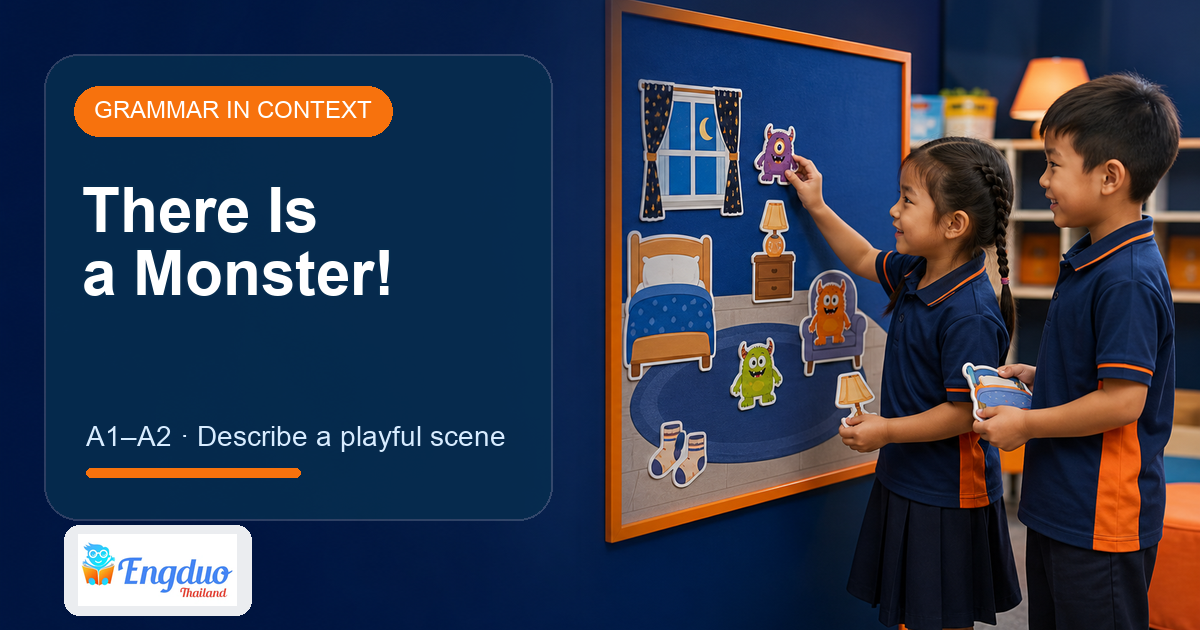

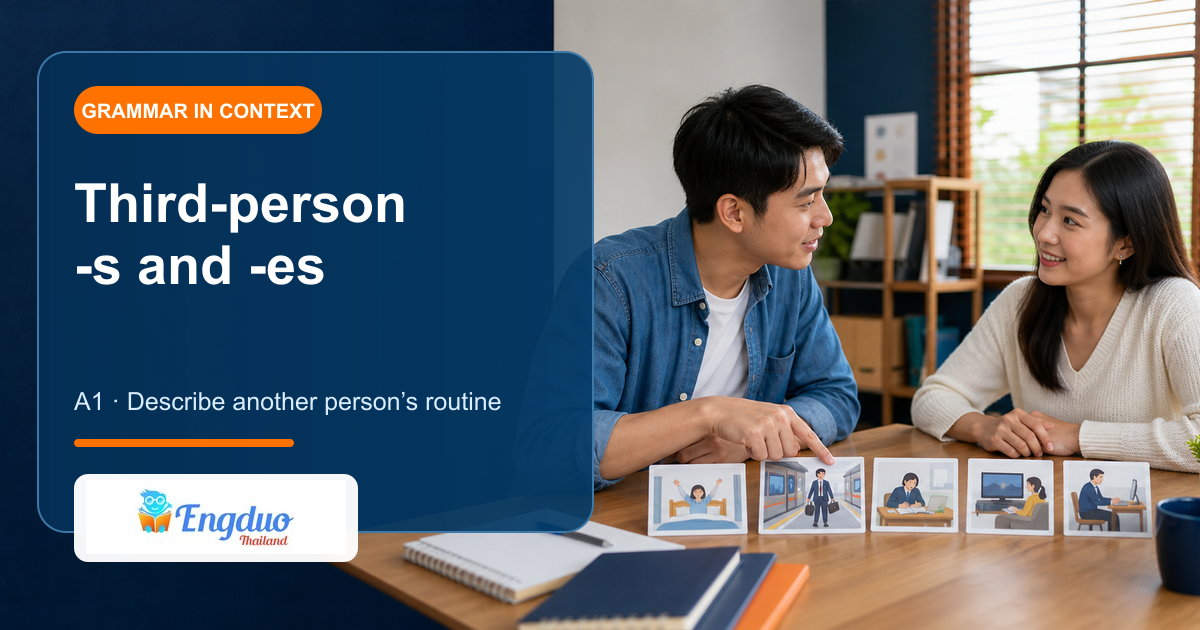

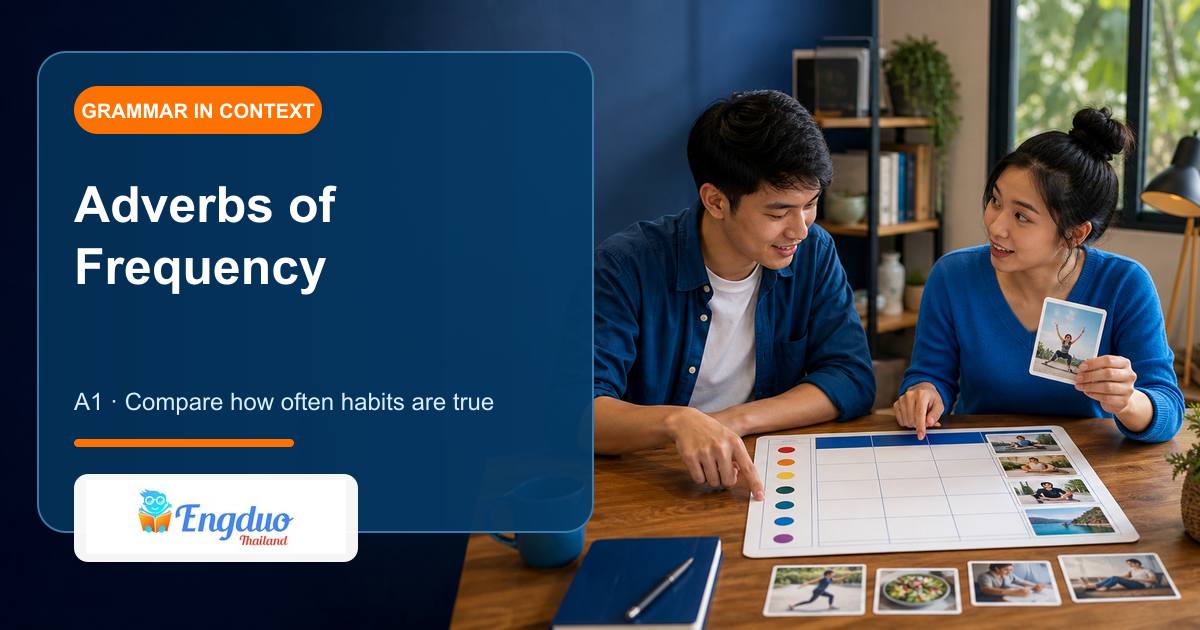
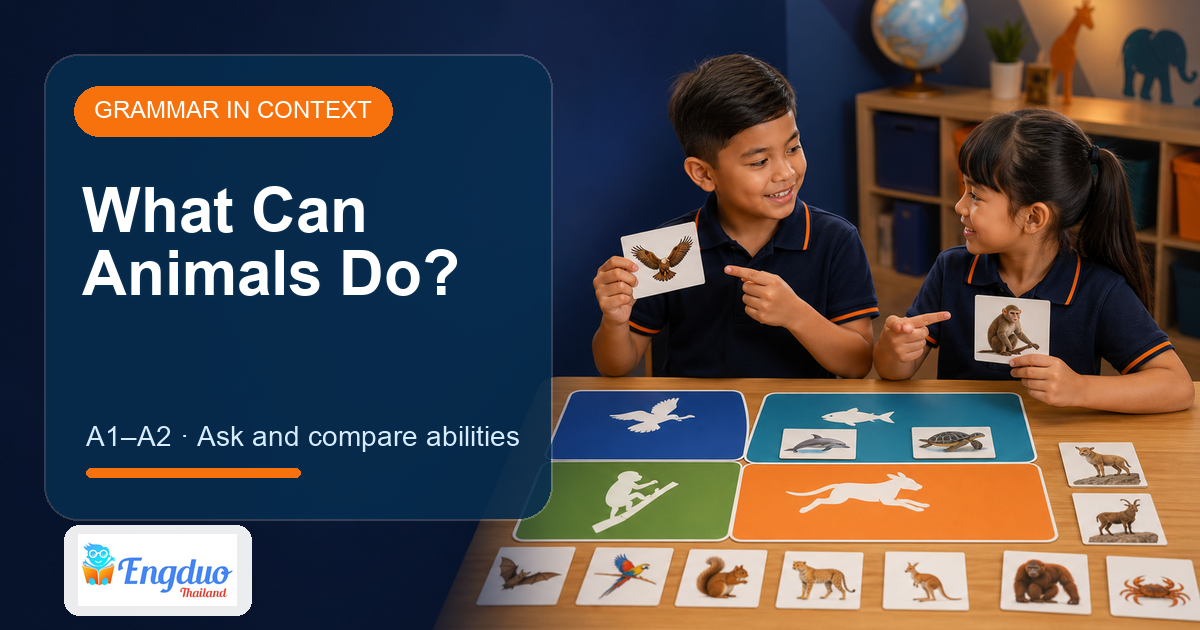
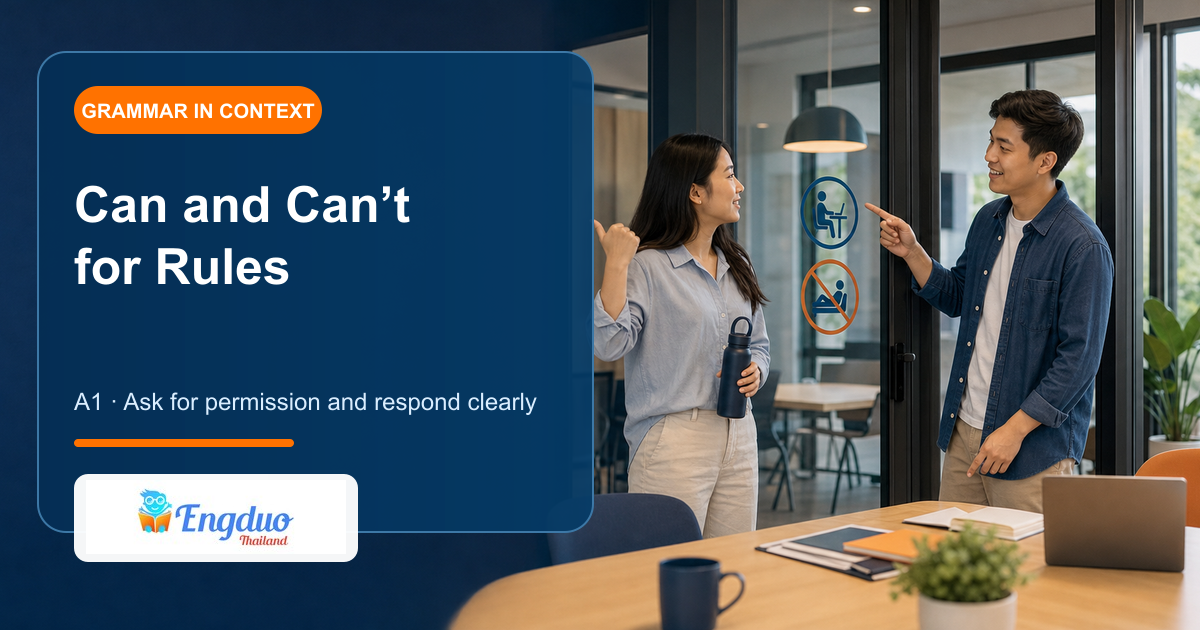
Can and Can’t for Permission and Simple Rules
can/can’t for permission and simple rules
Open lesson →

A1 Grammar Mastery: Introduce, Ask, Describe, and Respond
A1 integrated mastery: introduce, ask, describe, and respond
Open lesson →A2 · Everyday Communication
Tell past events, make arrangements, compare choices, give advice, describe likely results, and share experience.
26 lessons
Present Simple or Present Continuous?
Present simple or present continuous: routine versus now
Open lesson →
Past-simple Questions and Negatives with did
Past-simple questions and negatives with did
Open lesson →
Will for Decisions and Simple Predictions
will for immediate decisions and simple predictions
Open lesson →
Will, Going To, or Present Continuous?
Future choices: will, going to, or present continuous
Open lesson →
Articles for General and Specific Reference
Articles for general and specific reference
Open lesson →
A2 Grammar Mastery: Tell, Compare, Plan, and Advise
A2 integrated mastery: tell, compare, plan, and advise
Open lesson →B1 · Independent Communication
Control timelines, contrast related forms, explain processes, report messages, negotiate, and tell connected stories.
33 lessons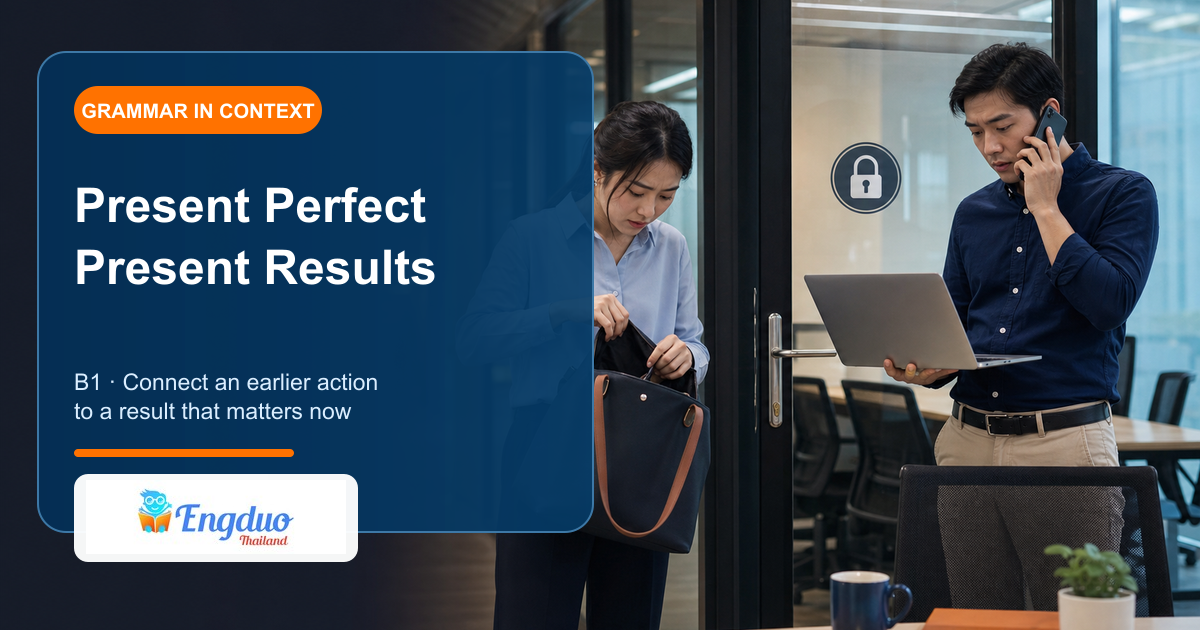
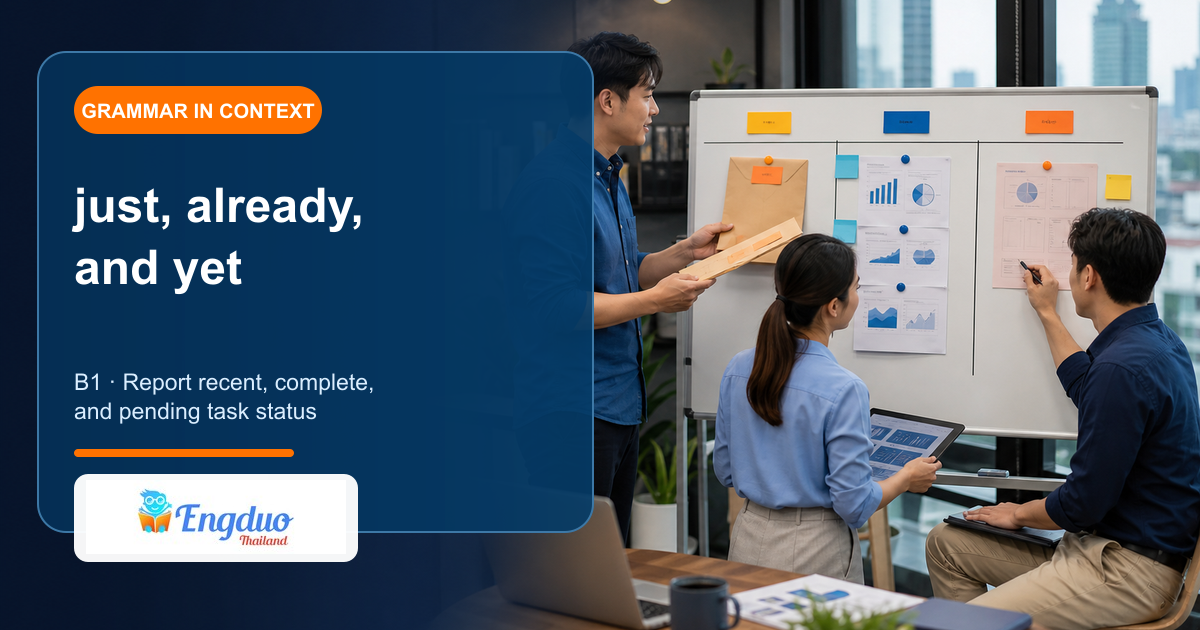
Present Perfect with just, already, and yet
Present perfect recent events with just, already, and yet
Open lesson →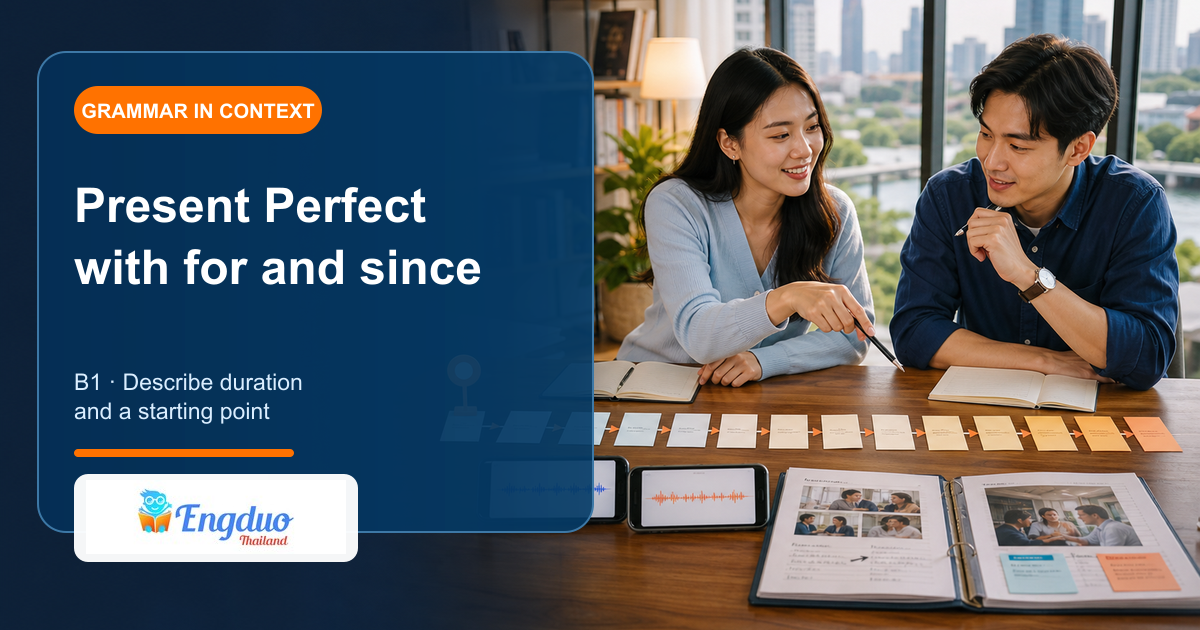
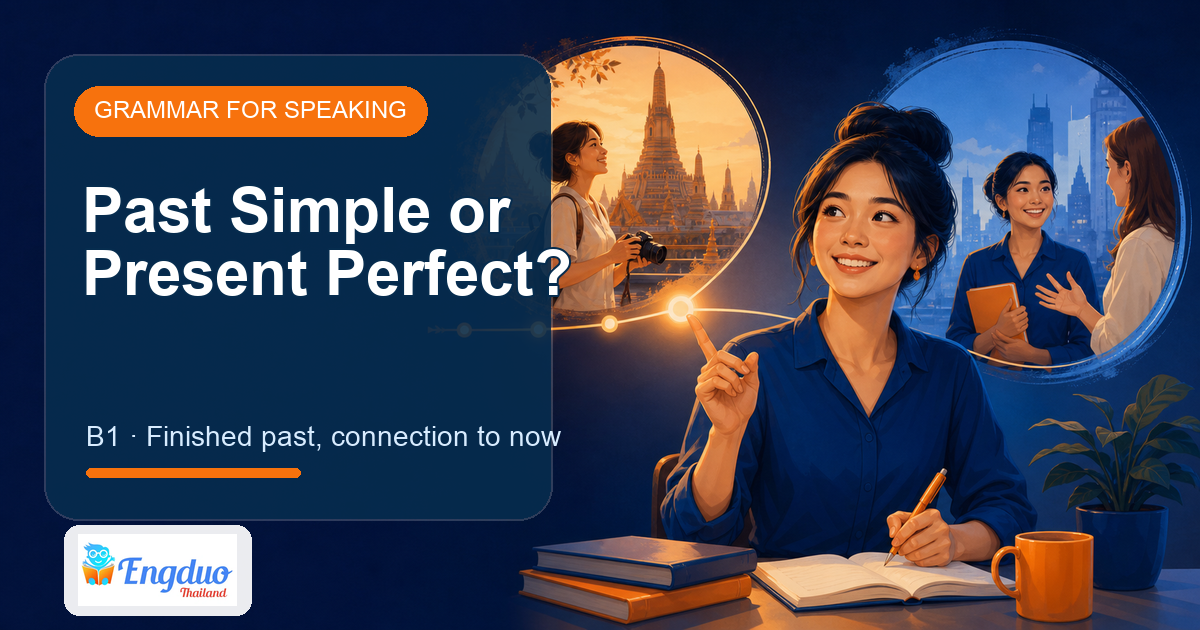
Results or Ongoing Activity?
Present perfect simple or continuous: result versus activity
Open lesson →
Narrative Tenses: Sequence and Background
Narrative tenses Part 1: sequence and background
Open lesson →
Narrative Tenses for Historical Stories
Narrative tenses Part 2: integrated storytelling
Open lesson →
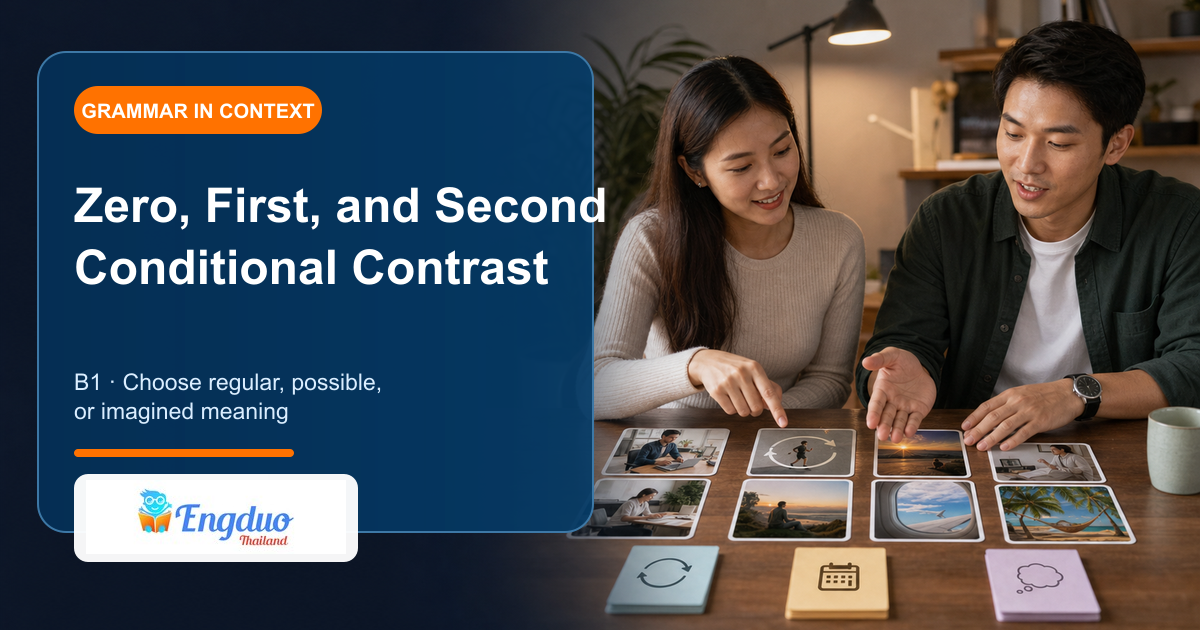
Zero, First, and Second Conditional Contrast
Zero, first, and second conditional contrast
Open lesson →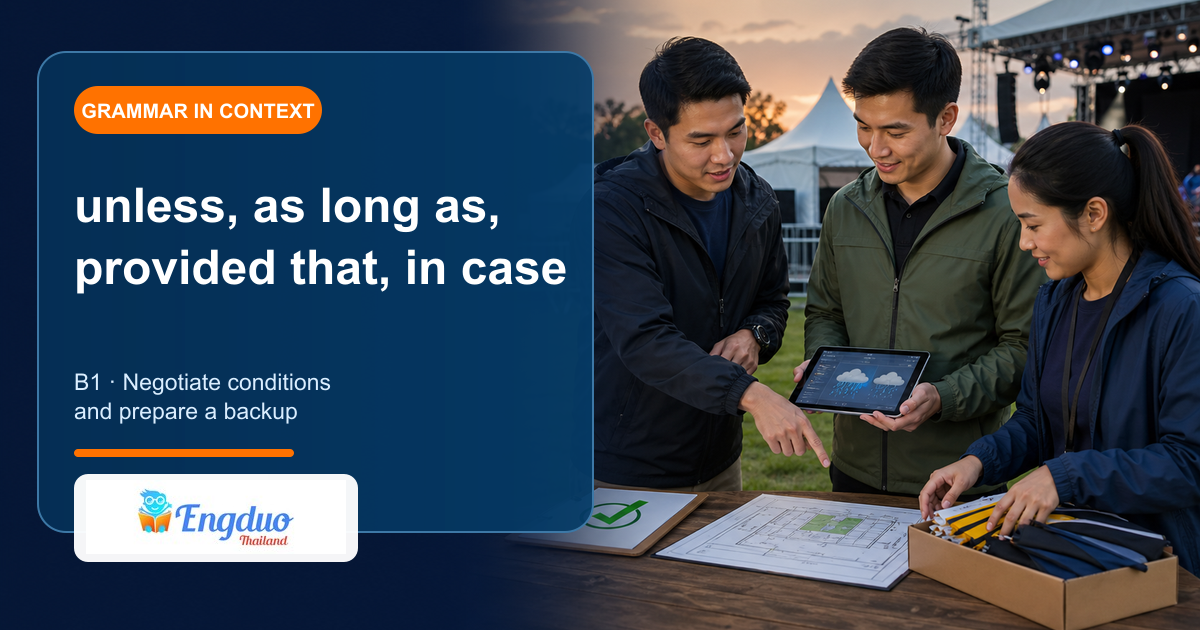
unless, as long as, provided that, and in case
unless, as long as, provided that, and in case
Open lesson →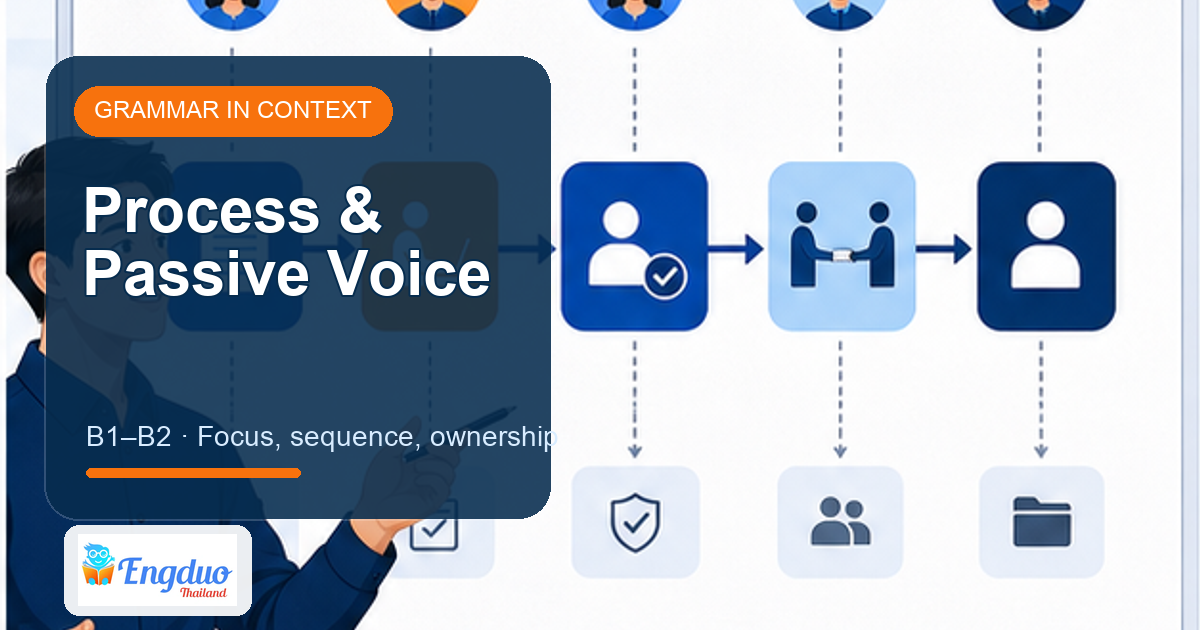
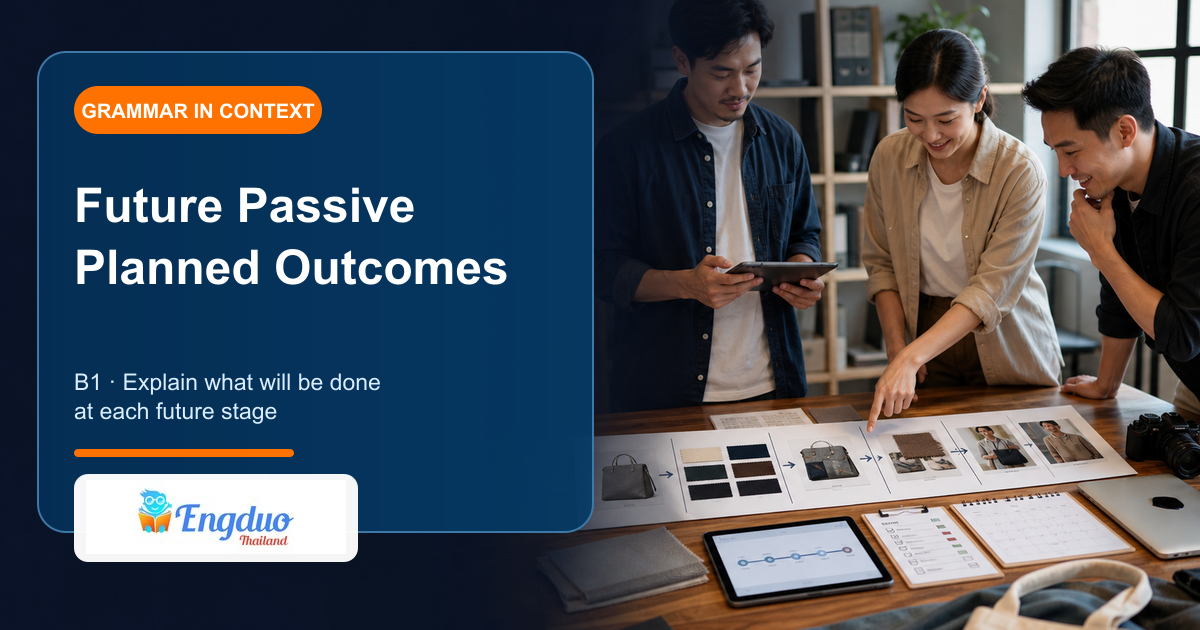
Future Passive for Planned and Expected Outcomes
Future passive for planned and expected outcomes
Open lesson →
Modal Passive for Rules, Requirements, and Possibilities
Modal passive for rules, requirements, and possibilities
Open lesson →
Modal Verbs for Present Certainty and Possibility
Modal verbs for present certainty and possibility
Open lesson →
could, was able to, and managed to for Past Ability
could, was able to, and managed to for past ability
Open lesson →
Gerund or Infinitive: Common Meaning Changes
Gerund or infinitive: common meaning changes
Open lesson →
Quantifiers for Amount, Sufficiency, and Shortage
Quantifiers for amount, sufficiency, and shortage
Open lesson →
Connect Reasons, Results, and Contrasting Ideas
Connect reasons, results, and contrasting ideas
Open lesson →
B1 Grammar Mastery: Explain, Negotiate, and Narrate
B1 integrated mastery: explain, negotiate, and narrate
Open lesson →B2 · Precision and Viewpoint
Express deduction, regret, stance, emphasis, information focus, and professional distance with greater accuracy.
34 lessons
Present Perfect for Repeated and Developing Situations
Present perfect for repeated and developing situations
Open lesson →
Advanced Narrative Viewpoint and Tense Control
Advanced narrative viewpoint and tense control
Open lesson →
Wish and If Only: Present and Past Regrets
wish and if only for present and past regrets
Open lesson →
Past Modals for Criticism, Regret, and Missed Options
Past modals for criticism and regret
Open lesson →
Advanced Reported Speech and Time Reference
Advanced reported speech and time reference
Open lesson →
Inversion after Negative Expressions
Introductory inversion after negative expressions
Open lesson →
Phrasal-Verb Word Order and Object Position
Phrasal-verb word order and object position
Open lesson →
Politeness, Distance, and Professional Register
Politeness, distance, and professional register
Open lesson →
B2 Grammar Mastery: Precision Under Pressure
B2 integrated mastery: precision under communication pressure
Open lesson →C1 · Control, Stance, and Flexibility
Reshape complex messages, manage emphasis and cohesion, and shift register for demanding spoken and written contexts.
24 lessons
Fine Distinctions in Obligation and Permission
Fine distinctions in obligation and permission
Open lesson →
C1 Integrated Mastery: Control, Stance, and Flexibility
C1 integrated mastery: control, stance, and flexibility
Open lesson →C2 · Mastery and Audience Awareness
Reformulate ideas precisely, control dense structures, and adapt nuanced communication across audiences and registers.
16 lessons
Reformulate One Meaning through Different Structures
Reformulate one meaning through different structures
Open lesson →
Fine Modal Stance and Interpersonal Distance
Fine modal stance and interpersonal distance
Open lesson →
Natural Spoken Compression and Incomplete Structures
Natural spoken compression and incomplete structures
Open lesson →
Edit Complex Language to Near-Error-Free Accuracy
Edit complex language to near-error-free accuracy
Open lesson →
Transform a Message across Registers and Audiences
Transform a message across registers and audiences
Open lesson →
C2 Integrated Mastery: Precise, Flexible, Audience-Aware Communication
C2 integrated mastery: precise, flexible, audience-aware communication
Open lesson →